






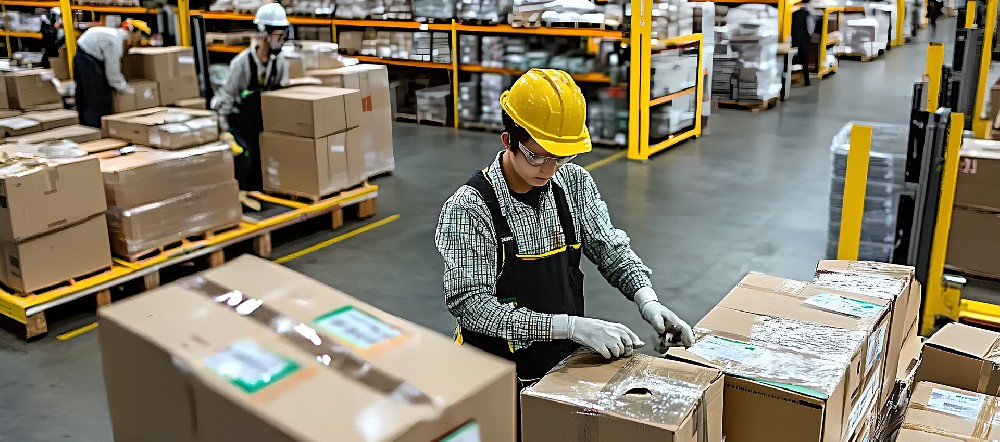
Comparison of three common pipeline characteristics
Source:https://www.loymachine.comDate:2025-08-12
Common types of assembly lines include plate chain assembly lines, roller assembly lines, and belt assembly lines. Today, we'll share the characteristics of these three types of lines:
1. Plate chain assembly lines. This type of line is characterized by its ability to carry relatively heavy products, enabling simultaneous production. Furthermore, because it uses the chain plate as a load carrier, it offers exceptional stability during product conveyance.
2. Roller assembly lines. This type of line is characterized by minimal restrictions and can be operated in conjunction with stoppers to meet product requirements. Furthermore, thanks to its use of a lifting and translation mechanism, maintenance can be performed without interruption, making it extremely convenient.
3. Belt assembly lines. This type of line is characterized by its ability to meet simultaneous production requirements, and its relatively smooth and noiseless conveying process. Furthermore, this method can also be used to transport lightweight materials over long distances, which is a key feature of its value.
Recommended News
-
Five Key Points for the Daily Maintenance of Flat Mask-Making Machines
The maintenance of flat-mask manufacturing machines directly impacts production capacity and product yield. This article outlines key points for daily inspection—covering cleaning, lubrication, management of wear-prone parts, checks of electrical and pneumatic systems, and operational standards—to help factories reduce failure rates and extend equipment lifespan.
2026-10-31 09:48:32 -
Guide to Improving Process Stability for Cup-Style Mask-Making Machines
This document analyzes common issues contributing to production instability in cup-style mask-making machines. It provides systematic solutions—covering equipment installation and commissioning, ultrasonic welding calibration, material consistency management, standardization of process parameters, and environmental temperature and humidity control—to help enterprises enhance production capacity, yield rates, and operational stability.
2026-10-30 13:33:22 -
Future Prospects of N95 Masks: Insights from a Leading N95 Mask Machine Manufacturer
As a trusted manufacturer of N95 mask production machinery, we have witnessed firsthand the dramatic evolution of the respiratory protection industry over the past few years. From a niche product used primarily in healthcare settings, the N95 mask has become a global essential. Now, as the initial surge of pandemic-driven demand stabilizes, many are asking: What does the future hold for N95 masks?In this article, we share our perspective on the long-term prospects of N95 masks, based on market trends, technological advancements, and evolving public health awareness.#### Sustained Demand Beyond the PandemicWhile emergency stockpiling has decreased, the underlying demand for high-filtration masks remains strong. Several factors contribute to this sustained interest:- **Heightened Health Awar
2026-09-02 08:11:25 -
Customizable Flat Mask Machine: Tailoring Solutions for Global Protection Needs
As global health and safety standards continue to evolve, the demand for disposable flat masks has become increasingly diversified. Modern automatic flat mask making machines have transitioned from simple mass-production tools to highly flexible manufacturing platforms. By utilizing modular designs, manufacturers can easily customize equipment to meet specific market requirements across medical, industrial, and daily protection sectors. Below is a comprehensive overview of the key customization options available for flat mask machines.Versatile Earloop and Tying OptionsThe wearing style of a mask dictates its application and sealing performance. While standard flat mask machines typically produce outer earloop masks, modular expansions allow for seamless transitions to various configuratio
2026-08-25 08:26:48