






The Future of Mask Manufacturing: Why Intelligent Automation is the New Standard
Source:https://www.loymachine.comDate:2026-07-08
The global landscape of personal protective equipment (PPE) has shifted permanently. As we move through 2026, the mask industry has evolved from a phase of emergency capacity expansion to a new era defined by quality, consistency, and intelligent manufacturing.
For manufacturers worldwide, the challenge is no longer just "how many masks can we make," but "how efficiently and reliably can we produce high-standard masks?" In this competitive environment, the automated mask production line has transitioned from a simple manufacturing tool to the core engine of business competitiveness.
�� Global Demand: A Shift Toward Quality and Standards
While the initial surge of the pandemic has stabilized, the global demand for masks remains robust, driven by heightened health awareness and stricter industrial safety regulations.
• Medical & Healthcare: Hospitals and clinics now demand consistent, certified protection (e.g., Type IIR, ASTM Level 3).
• Industrial & Civil Use: With concerns over air quality and seasonal viruses, the market for high-filtration respirators (N95, FFP2, FFP3) is growing steadily in Europe, North America, and Southeast Asia.
Buyers are no longer compromising on quality. They require masks with perfect sealing, comfortable ear loops, and reliable filtration. Meeting these standards manually or with outdated semi-automatic machines is impossible. High-end automation is the only path forward.
⚙️ The Core Advantage: Precision, Speed, and Stability
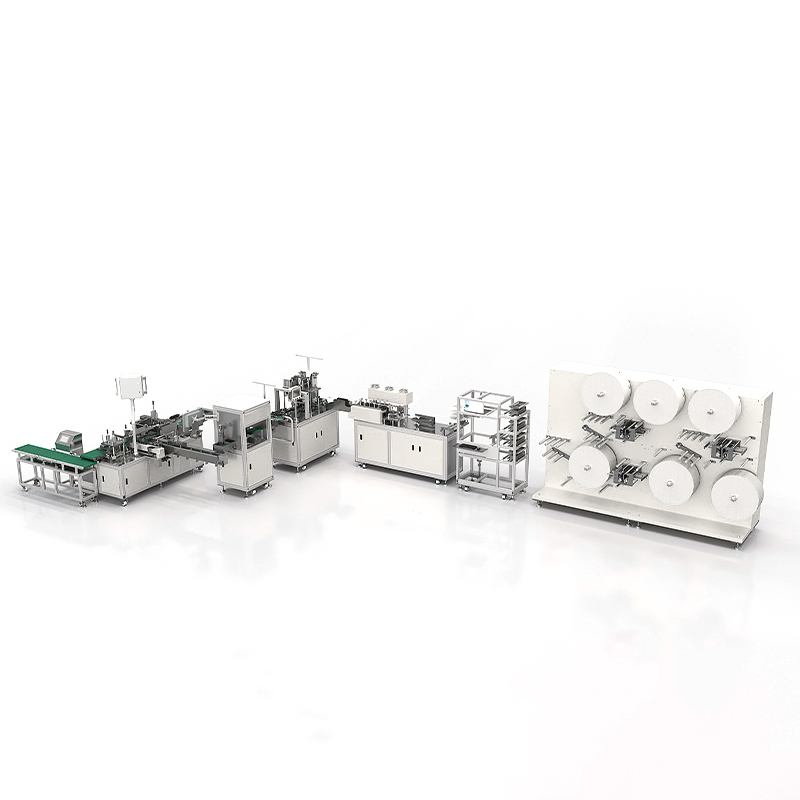
Modern automated mask production lines are redefining efficiency. Unlike traditional methods that rely heavily on manual labor, fully automated solutions integrate every step—from raw material feeding to final packaging—into a seamless workflow.
Key technological breakthroughs driving this change include:
• Servo-Driven Precision: Advanced lines now utilize multi-axis servo motors to control material feeding. This ensures that the nose bridge clip is cut and positioned with millimeter-level accuracy, solving the common issue of misalignment.
• Ultrasonic Welding Technology: High-frequency ultrasonic welding creates seamless, strong bonds without glue or staples. This is critical for producing hypoallergenic masks that are comfortable for long-term wear.
• Tension Control Systems: Intelligent damping mechanisms prevent fabric distortion during high-speed production, ensuring the mask layers remain flat and uniform.
Industry Insight: A top-tier fully automatic mask line can now produce 800 to 1,200 pieces per minute with a defect rate of less than 1.5%. This level of efficiency drastically reduces labor costs and maximizes ROI for manufacturers.
�� Smart Manufacturing: The "Black Light" Factory
The industry is moving towards Industry 4.0. The latest generation of mask production equipment is not just "automatic"; it is intelligent.
1. Visual Inspection Systems: Integrated AI cameras can detect defects (such as dirty spots or missing ear loops) in real-time, automatically rejecting non-compliant products.
2. Remote Diagnostics: Manufacturers can now offer remote support, troubleshooting PLC (Programmable Logic Controller) errors via the cloud to minimize downtime for clients overseas.
3. Flexibility: Modular designs allow a single machine to switch between different mask types (e.g., changing from adult to child sizes, or flat to folded masks) with minimal downtime.
�� Sustainability and Material Adaptability
Sustainability is a major trend in 2026. As the world moves away from single-use plastics, there is a rising demand for masks made from biodegradable non-woven fabrics (such as PLA materials).
These eco-friendly materials often have different tensile properties compared to traditional polypropylene. Therefore, modern production lines must be engineered to handle these delicate materials without breaking or jamming. Equipment manufacturers that can offer machines compatible with green materials are leading the market.
�� Partnering for Success
China remains the global hub for PPE machinery, offering a complete supply chain and rapid technological iteration. However, the "price war" era is over. International buyers are now looking for partners, not just vendors.
As a professional manufacturer of mask production lines, we understand that you need more than a machine; you need a solution. You need equipment that runs stably 24/7, consumes less energy, and produces export-quality goods that meet international standards.
The future of mask manufacturing belongs to those who embrace automation. By investing in intelligent, high-speed production lines, manufacturers can secure their position in the global market, ensuring they are ready to meet the health needs of the world with speed and precision.
Recommended News
-
FFP3 mask machine manufacturers explain: What are FFP3 masks used for?
When it comes to high-level respiratory protection in European safety standards, FFP3 masks stand out as the most reliable barrier against ultra-fine harmful particles. Many users confuse FFP3 masks with ordinary disposable masks or FFP1/FFP2 protective masks, unaware of their unique protection level and exclusive application scenarios. As professional FFP3 mask machine manufacturers, we will systematically explain the core functions, protection advantages and main uses of FFP3 masks to help you accurately match protective equipment for different high-risk environments.Basic Overview: What Is an FFP3 Mask?FFP3 (Filtering Face Piece 3) is the highest-grade particulate filtering half-mask under the European EN 149 standard, belonging to the core category of professional respiratory protectiv
2026-07-28 08:27:45 -
N95 Mask Machine: Core Automatic Equipment for High-Efficiency Protective Mask Production
N95 Mask Machine: Core Automatic Equipment for High-Efficiency Protective Mask ProductionWidely applied in public health protection, industrial dust prevention, medical protection and other fields, N95 masks have become essential protective supplies thanks to their excellent particulate filtration performance. The N95 mask machine is an intelligent automatic production line specially designed for mass and standardized production of folded N95 protective masks. Adopting precision mechanical transmission, ultrasonic welding and intelligent electronic control system, it realizes fully automatic operations from raw material processing to finished mask output, serving as the core key equipment for protective mask manufacturers.Different from ordinary flat mask machines, the N95 mask machine is
2026-07-24 08:55:50 -
Redefining Beauty & Hygiene: The Era of Fully Automated Cotton Pad Production
In the rapidly evolving worlds of personal care, beauty, and hygiene, the humble cotton pad is a staple product. From removing makeup to applying toner, or for delicate baby care, the demand for high-quality, soft, and hygienic cotton pads is at an all-time high.However, for manufacturers, producing these essential items profitably requires overcoming challenges related to speed, hygiene, and material consistency. The solution lies in the Fully Automated Cotton Pad Machine—a sophisticated manufacturing system designed to transform raw non-woven fabric and cotton into perfectly shaped, sealed, and stacked pads with minimal human intervention.�� From Raw Material to Finished Product: A Seamless ProcessUnlike older semi-automatic methods that required manual feeding and stacking, modern fu
2026-07-08 08:49:45 -
Mastering the FFP3 Standard: The Key to High-End Respirator Production
In the global Personal Protective Equipment (PPE) market, the FFP3 standard represents the pinnacle of respiratory protection. As the highest filtration class under the European EN 149 standard, FFP3 respirators are critical for high-risk environments, including healthcare, heavy industry, and pharmaceutical manufacturing.For mask manufacturers, entering the FFP3 market is not just about capacity—it is about precision. Producing a mask that meets the stringent 99% filtration efficiency requirement demands more than just raw materials; it requires a sophisticated, high-precision FFP3 Mask Making Machine.The Engineering Challenge: Why FFP3 Requires Specialized MachineryUnlike standard surgical or civil masks, FFP3 respirators utilize multiple layers of high-efficiency filter media. This mat
2026-07-08 08:28:16