







Guide to Improving Process Stability for Cup-Style Mask-Making Machines
Source:https://www.loymachine.comDate:2026-10-30
As the core equipment for manufacturing cup-style protective masks, the operational stability of a cup-style mask machine directly impacts production capacity, yield rates, and manufacturing costs. In practice, many enterprises encounter issues such as inconsistent operating speeds, weak welds, forming deviations, and frequent machine downtime. Achieving stable production requires a comprehensive approach that extends beyond simple adjustments to individual components; it necessitates systematic management across equipment commissioning, material handling, process parameters, and routine maintenance. The following analysis explores several key areas to help users identify actionable strategies for enhancing operational stability.
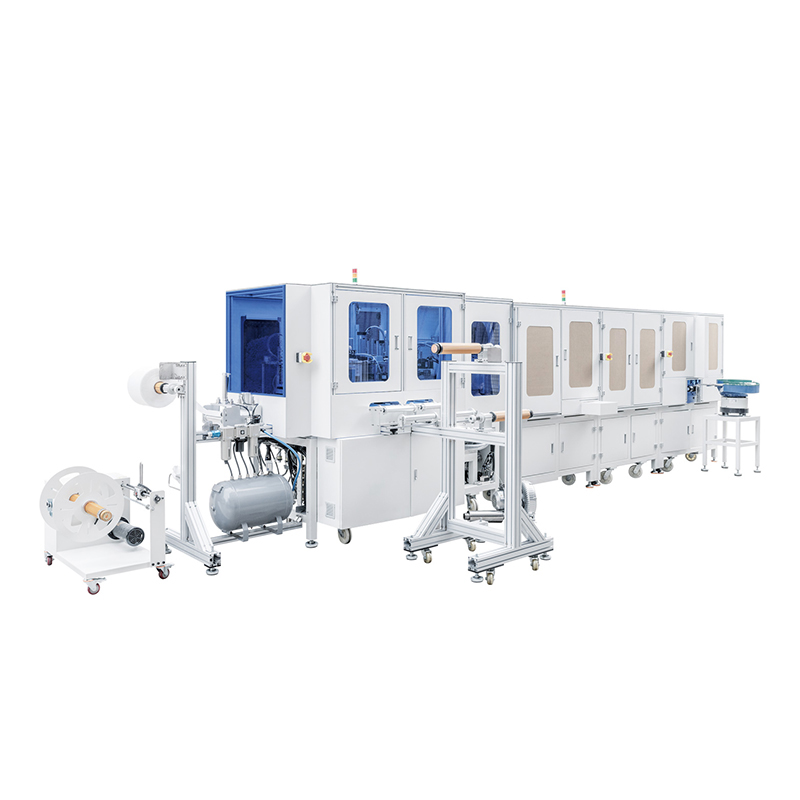
Proper installation and initial commissioning form the foundation for stable production. Cup-style mask machines feature a relatively complex structure, comprising multiple stations—such as feeding, forming, welding, and cutting—that require a high degree of synchronization. During installation, it is essential to ensure the machine frame is level and that the leveling feet bear weight evenly; this prevents machine tilt, which could otherwise accelerate the wear of transmission components or cause positioning errors. During the commissioning phase, focus on calibrating the ultrasonic welding system—specifically the frequency matching and the pressure applied by the welding horn. The parallelism between the welding horn and the bottom die must be kept within specified tolerances to avoid issues like weak welds or the material being burned through. Furthermore, the clearances for the forming molds and the cutting dies must be precisely adjusted based on the material thickness; excessive clearance can lead to burrs, while insufficient clearance accelerates tool wear. Once commissioning is complete, the machine should undergo continuous test runs—both without and with materials—to verify the timing of each station’s operations and ensure there are no jams or abnormal noises before full-scale production begins.
Material consistency is another critical variable affecting stability. Cup-style masks are typically composed of non-woven fabric, melt-blown fabric, nose wires, and ear loops. Variations in basis weight, thickness, flexibility, and the coefficient of friction between different batches of materials can directly disrupt the feeding process and compromise welding quality. It is advisable to implement a sampling inspection system for incoming materials, with a particular focus on the basis weight of the fabrics and the straightness of the nose wires. Additionally, since material rolls that are either too large or too small in diameter can cause fluctuations in tension, the installation of a tension control device may be necessary. Furthermore, the temperature and humidity of the production environment cannot be overlooked. Excessive humidity can cause melt-blown fabric to absorb moisture, leading to weak or "false" welds; conversely, low humidity often generates static electricity, causing the fabric to shift or adhere to machine components. Maintaining a relatively stable temperature and humidity in the workshop, while ensuring that materials are stored in sealed containers, can significantly reduce downtime caused by material-related issues.
The standardization and dynamic optimization of process parameters are equally critical. Parameters such as machine speed, welding time, welding pressure, and cooling time are interconnected; blindly pursuing higher production speeds often comes at the expense of weld strength and forming precision. It is advisable to establish a parameter profile for each product specification—defining upper limits for speed and ranges for welding energy—and to reset the machine according to these profiles whenever materials or product specifications are changed, rather than relying on ad-hoc adjustments based on personal experience. During production, simple process monitoring—such as periodic spot checks of weld tensile strength, the positioning of nose wires, and the symmetry of the cup-shaped masks—can help identify emerging deviations, allowing for timely fine-tuning before a large number of defective products are generated. For ultrasonic systems, the resonance state of the transducer and welding horn (sonotrode) should also be checked regularly, as frequency drift can directly lead to unstable welding.
Finally, preventive maintenance is the key to long-term, stable operation. Because cup-shaped mask machines operate at high cycle rates, components such as drive belts, bearings, guide rails, and cutting tools are prone to wear. A schedule for routine inspections and replacements should be established, alongside regular tasks like cleaning molten residue from the welding horn, lubricating moving parts, and verifying the stability of pneumatic system pressure. Many sudden breakdowns are preceded by warning signs—such as unusual noises, sluggish movement, or an increase in product burrs. Implementing a pre-shift inspection routine and maintaining a log of malfunctions can help identify potential issues before they escalate. In summary, the stability of a cup-shaped mask machine is the result of a combination of precise setup, proper material handling, optimized processes, and diligent maintenance. Only by managing these details meticulously and establishing robust, data-driven parameters can the equipment consistently and efficiently produce high-quality, compliant products.
Previous:Future Prospects of N95 Masks: Insights from a Leading N95 Mask Machine Manufacturer
Next:no more
Recommended News
-
Guide to Improving Process Stability for Cup-Style Mask-Making Machines
This document analyzes common issues contributing to production instability in cup-style mask-making machines. It provides systematic solutions—covering equipment installation and commissioning, ultrasonic welding calibration, material consistency management, standardization of process parameters, and environmental temperature and humidity control—to help enterprises enhance production capacity, yield rates, and operational stability.
2026-10-30 13:33:22 -
Future Prospects of N95 Masks: Insights from a Leading N95 Mask Machine Manufacturer
As a trusted manufacturer of N95 mask production machinery, we have witnessed firsthand the dramatic evolution of the respiratory protection industry over the past few years. From a niche product used primarily in healthcare settings, the N95 mask has become a global essential. Now, as the initial surge of pandemic-driven demand stabilizes, many are asking: What does the future hold for N95 masks?In this article, we share our perspective on the long-term prospects of N95 masks, based on market trends, technological advancements, and evolving public health awareness.#### Sustained Demand Beyond the PandemicWhile emergency stockpiling has decreased, the underlying demand for high-filtration masks remains strong. Several factors contribute to this sustained interest:- **Heightened Health Awar
2026-09-02 08:11:25 -
Customizable Flat Mask Machine: Tailoring Solutions for Global Protection Needs
As global health and safety standards continue to evolve, the demand for disposable flat masks has become increasingly diversified. Modern automatic flat mask making machines have transitioned from simple mass-production tools to highly flexible manufacturing platforms. By utilizing modular designs, manufacturers can easily customize equipment to meet specific market requirements across medical, industrial, and daily protection sectors. Below is a comprehensive overview of the key customization options available for flat mask machines.Versatile Earloop and Tying OptionsThe wearing style of a mask dictates its application and sealing performance. While standard flat mask machines typically produce outer earloop masks, modular expansions allow for seamless transitions to various configuratio
2026-08-25 08:26:48 -
FFP3 mask machine manufacturers explain: What are FFP3 masks used for?
When it comes to high-level respiratory protection in European safety standards, FFP3 masks stand out as the most reliable barrier against ultra-fine harmful particles. Many users confuse FFP3 masks with ordinary disposable masks or FFP1/FFP2 protective masks, unaware of their unique protection level and exclusive application scenarios. As professional FFP3 mask machine manufacturers, we will systematically explain the core functions, protection advantages and main uses of FFP3 masks to help you accurately match protective equipment for different high-risk environments.Basic Overview: What Is an FFP3 Mask?FFP3 (Filtering Face Piece 3) is the highest-grade particulate filtering half-mask under the European EN 149 standard, belonging to the core category of professional respiratory protectiv
2026-07-28 08:27:45