




Equipment required for disposable mask production line
Source:http://www.loymachine.comDate:2025-09-26
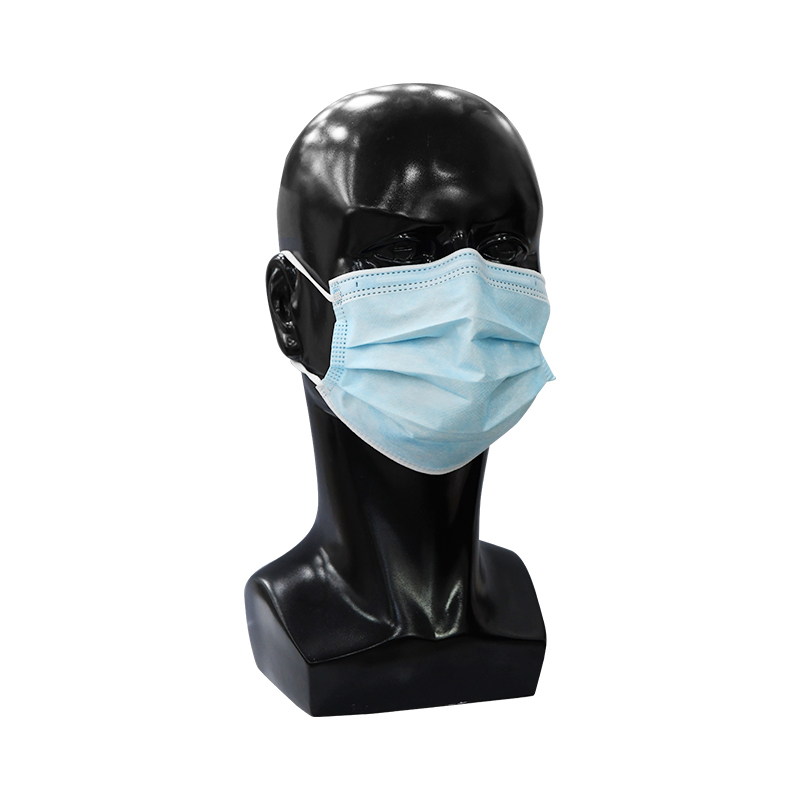
Disposable masks are made of non-woven and meltblown fabrics and are suitable for a variety of applications, including electronics manufacturing, cleanrooms, catering services, food processing, motorcycle riding, spray painting, stamping, hardware, electroplating, chemicals, steel, welding, health centers, handicrafts, beauty salons, pharmaceuticals, factories, environmental cleaning, and public spaces. So, what machines are needed to make disposable masks? Below, LOY will introduce semi-automatic and fully automatic disposable mask production equipment.
I. Semi-Automatic Production Equipment
1. Mask Machine
(Can be equipped with a nose bridge strip)
2. Ear Loop Welding Machine
(Manually weld ear loops)
(Automatically weld ear loops)
II. Fully Automatic Production Equipment
1. Fully Automatic Disposable Mask Machine
(Directly produces finished products, can be equipped with a nose bridge strip)
2. Fully Automatic One-to-Two Mask Machine
(Produces two finished products at once, can be equipped with a nose bridge strip)
3. Fully Automatic One-to-Three Mask Machine
(Produces three finished products at once, can be equipped with a nose bridge strip)
Recommended News
-
Future Prospects of N95 Masks: Insights from a Leading N95 Mask Machine Manufacturer
As a trusted manufacturer of N95 mask production machinery, we have witnessed firsthand the dramatic evolution of the respiratory protection industry over the past few years. From a niche product used primarily in healthcare settings, the N95 mask has become a global essential. Now, as the initial surge of pandemic-driven demand stabilizes, many are asking: What does the future hold for N95 masks?In this article, we share our perspective on the long-term prospects of N95 masks, based on market trends, technological advancements, and evolving public health awareness.#### Sustained Demand Beyond the PandemicWhile emergency stockpiling has decreased, the underlying demand for high-filtration masks remains strong. Several factors contribute to this sustained interest:- **Heightened Health Awar
2026-09-02 08:11:25 -
Customizable Flat Mask Machine: Tailoring Solutions for Global Protection Needs
As global health and safety standards continue to evolve, the demand for disposable flat masks has become increasingly diversified. Modern automatic flat mask making machines have transitioned from simple mass-production tools to highly flexible manufacturing platforms. By utilizing modular designs, manufacturers can easily customize equipment to meet specific market requirements across medical, industrial, and daily protection sectors. Below is a comprehensive overview of the key customization options available for flat mask machines.Versatile Earloop and Tying OptionsThe wearing style of a mask dictates its application and sealing performance. While standard flat mask machines typically produce outer earloop masks, modular expansions allow for seamless transitions to various configuratio
2026-08-25 08:26:48 -
FFP3 mask machine manufacturers explain: What are FFP3 masks used for?
When it comes to high-level respiratory protection in European safety standards, FFP3 masks stand out as the most reliable barrier against ultra-fine harmful particles. Many users confuse FFP3 masks with ordinary disposable masks or FFP1/FFP2 protective masks, unaware of their unique protection level and exclusive application scenarios. As professional FFP3 mask machine manufacturers, we will systematically explain the core functions, protection advantages and main uses of FFP3 masks to help you accurately match protective equipment for different high-risk environments.Basic Overview: What Is an FFP3 Mask?FFP3 (Filtering Face Piece 3) is the highest-grade particulate filtering half-mask under the European EN 149 standard, belonging to the core category of professional respiratory protectiv
2026-07-28 08:27:45 -
N95 Mask Machine: Core Automatic Equipment for High-Efficiency Protective Mask Production
N95 Mask Machine: Core Automatic Equipment for High-Efficiency Protective Mask ProductionWidely applied in public health protection, industrial dust prevention, medical protection and other fields, N95 masks have become essential protective supplies thanks to their excellent particulate filtration performance. The N95 mask machine is an intelligent automatic production line specially designed for mass and standardized production of folded N95 protective masks. Adopting precision mechanical transmission, ultrasonic welding and intelligent electronic control system, it realizes fully automatic operations from raw material processing to finished mask output, serving as the core key equipment for protective mask manufacturers.Different from ordinary flat mask machines, the N95 mask machine is
2026-07-24 08:55:50