






FFP3 mask machine manufacturers explain: What are FFP3 masks used for?
Source:http://www.loymachine.comDate:2026-07-28
When it comes to high-level respiratory protection in European safety standards, FFP3 masks stand out as the most reliable barrier against ultra-fine harmful particles. Many users confuse FFP3 masks with ordinary disposable masks or FFP1/FFP2 protective masks, unaware of their unique protection level and exclusive application scenarios. As professional FFP3 mask machine manufacturers, we will systematically explain the core functions, protection advantages and main uses of FFP3 masks to help you accurately match protective equipment for different high-risk environments.
Basic Overview: What Is an FFP3 Mask?
FFP3 (Filtering Face Piece 3) is the highest-grade particulate filtering half-mask under the European EN 149 standard, belonging to the core category of professional respiratory protective equipment. Different from ordinary civil masks, FFP3 masks have extremely strict production and testing specifications, which are also the key technical standards that professional FFP3 mask machine manufacturers strictly follow in production.
In terms of core performance, FFP3 masks achieve a minimum filtration efficiency of 99% for airborne particles, with a maximum total leakage rate of only 2%. They can effectively filter both non-oily and oily harmful particles, far exceeding the protection level of FFP1 and FFP2 masks. In addition, qualified FFP3 masks can resist air pollutants 20 to 30 times the legal occupational exposure limit, providing ultimate respiratory safety protection for users in high-risk scenarios.
Core Uses of FFP3 Masks: Main Application Scenarios
Thanks to its top-tier filtration performance and tight facial fitting design, FFP33 masks are not used for daily ordinary protection. They are mainly applied in industrial high-risk operations, medical high-infection environments, special hazardous operation scenarios and other fields that require extreme respiratory protection. The detailed applicable scenarios are as follows:
1. High-Risk Medical and Healthcare Scenarios
The medical industry is one of the most mainstream application fields of FFP3 masks. Ordinary medical surgical masks can only block large droplets and splashes, while FFP3 masks can effectively intercept airborne fine aerosols, viruses, bacteria and fungal spores, which is irreplaceable for preventing airborne cross-infection.
Medical staff will wear FFP3 masks when diagnosing and treating patients with highly infectious diseases such as tuberculosis, COVID-19, and other respiratory infectious diseases. Relevant medical research shows that the widespread use of FFP3 masks in hospital wards can greatly reduce the infection rate of medical staff, creating a safe working environment for frontline medical workers.
2. Industrial High-Toxic and Hazardous Operation Scenarios
In industrial production environments filled with toxic dust, harmful fumes and carcinogenic particles, FFP3 masks are essential personal protective equipment. They can filter heavy metal dust, alloy particles, welding fumes, diesel exhaust particles and other harmful substances that are difficult to block by ordinary masks.
Specific applicable operations include: high-alloy steel cutting, drilling and polishing, stainless steel welding, thorium electrode processing, hardwood processing, brake dust cleaning, and asbestos operation. For workers engaged in long-term industrial operations, FFP3 masks can effectively avoid occupational respiratory diseases such as pneumoconiosis and tracheal inflammation.
3. Special Hazardous Scenarios: Radioactive and Chemical Pollution
Different from FFP2 masks that only adapt to conventional harmful particles, FFP3 masks support protection against special pollutants such asradioactive particles and chemical toxic aerosols. In nuclear industry maintenance, radioactive waste disposal, chemical raw material processing and other special scenarios, FFP3 masks can stably intercept ultra-fine radioactive dust and chemical volatile particles.
At the same time, it can resist enzyme aerosols and high-risk biological agents of risk groups 2 and 3, and is widely used in biological laboratories, chemical testing institutions and other professional places with strict safety standards.
4. Professional Environmental Remediation and Sanitation Work
In environmental pollution remediation, mold removal, construction waste cleaning and other work, the air contains a large number of mold spores, toxic dust and mixed pollutants. FFP3 masks can comprehensively filter mixed harmful particles of different sizes, effectively protecting sanitation and remediation workers from respiratory damage caused by complex pollutants.
FFP3 Mask vs FFP1/FFP2 Masks: Clear Grade Differences
To help users accurately distinguish and select masks, we sort out the core differences in protection levels of the three European standard masks:
FFP1 Mask: The basic protective grade, with a filtration efficiency of about 80%, only suitable for ordinary non-toxic dust prevention in daily industrial production, with no protective effect on toxic and harmful particles.
FFP2 Mask: The medium protective grade, with a filtration efficiency of about 94%, suitable for daily medical protection and conventional industrial dust prevention, but insufficient for high-toxicity and radioactive particles.
FFP3 Mask: The highest protective grade, with a filtration efficiency of ≥99%, covering all scenarios of FFP1 and FFP2, and exclusively applicable to high-risk environments such as high toxicity, high infection and radioactivity.
Professional Reminders from FFP3 Mask Machine Manufacturers
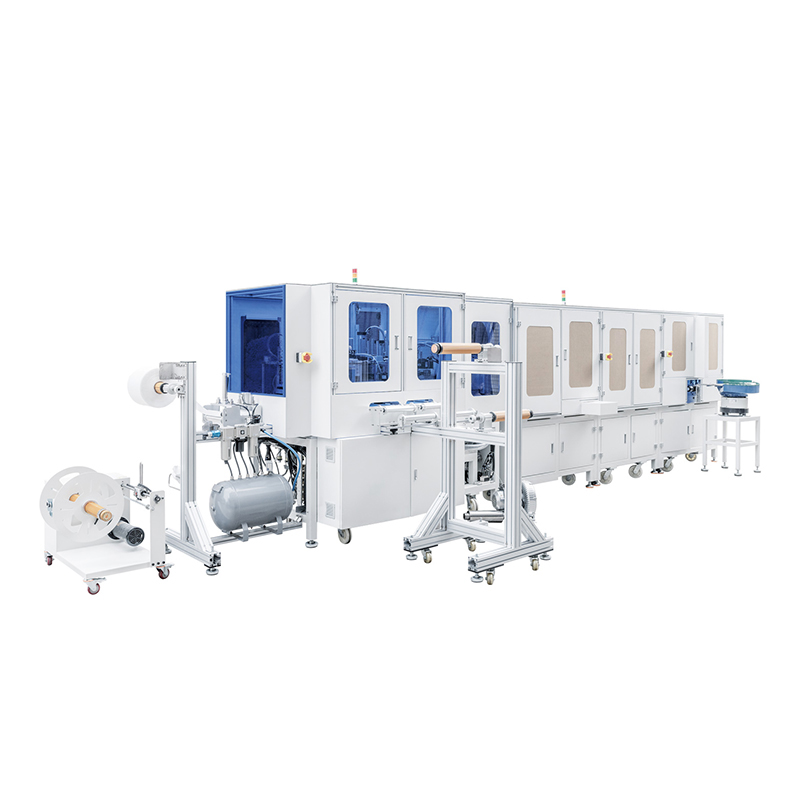
The protective performance of FFP3 masks is directly determined by production technology and equipment precision. As professional FFP3 mask machine manufacturers, we remind users that qualified FFP3 masks must pass EN 149 standard certification, with stable filtration performance, tight fitting and good air permeability.
Unqualified FFP3 masks produced by low-precision equipment have problems such as unstable filtration efficiency and large edge leakage, which cannot achieve high-level protection. Therefore, when purchasing FFP3 masks, you must choose products from regular manufacturers with complete certification to ensure the safety of respiratory protection.
Final Summary
In short, FFP3 masks are the highest-standard respiratory protective masks in the European FFP series, focusing on high-risk scenarios that ordinary masks cannot cope with. They are widely used in high-infection medical treatment, toxic industrial operations, special radioactive and chemical work, and complex environmental remediation. With ultra-high filtration efficiency and strong pollutant resistance, they provide ultimate safety protection for professional operators in various high-risk industries.
For mask manufacturers, high-precision FFP3 mask machines are the core guarantee for producing qualified protective masks. Our equipment strictly complies with EU production standards, helping customers produce high-quality CE-certified FFP3 masks that meet market demand.
Recommended News
-
Future Prospects of N95 Masks: Insights from a Leading N95 Mask Machine Manufacturer
As a trusted manufacturer of N95 mask production machinery, we have witnessed firsthand the dramatic evolution of the respiratory protection industry over the past few years. From a niche product used primarily in healthcare settings, the N95 mask has become a global essential. Now, as the initial surge of pandemic-driven demand stabilizes, many are asking: What does the future hold for N95 masks?In this article, we share our perspective on the long-term prospects of N95 masks, based on market trends, technological advancements, and evolving public health awareness.#### Sustained Demand Beyond the PandemicWhile emergency stockpiling has decreased, the underlying demand for high-filtration masks remains strong. Several factors contribute to this sustained interest:- **Heightened Health Awar
2026-09-02 08:11:25 -
Customizable Flat Mask Machine: Tailoring Solutions for Global Protection Needs
As global health and safety standards continue to evolve, the demand for disposable flat masks has become increasingly diversified. Modern automatic flat mask making machines have transitioned from simple mass-production tools to highly flexible manufacturing platforms. By utilizing modular designs, manufacturers can easily customize equipment to meet specific market requirements across medical, industrial, and daily protection sectors. Below is a comprehensive overview of the key customization options available for flat mask machines.Versatile Earloop and Tying OptionsThe wearing style of a mask dictates its application and sealing performance. While standard flat mask machines typically produce outer earloop masks, modular expansions allow for seamless transitions to various configuratio
2026-08-25 08:26:48 -
FFP3 mask machine manufacturers explain: What are FFP3 masks used for?
When it comes to high-level respiratory protection in European safety standards, FFP3 masks stand out as the most reliable barrier against ultra-fine harmful particles. Many users confuse FFP3 masks with ordinary disposable masks or FFP1/FFP2 protective masks, unaware of their unique protection level and exclusive application scenarios. As professional FFP3 mask machine manufacturers, we will systematically explain the core functions, protection advantages and main uses of FFP3 masks to help you accurately match protective equipment for different high-risk environments.Basic Overview: What Is an FFP3 Mask?FFP3 (Filtering Face Piece 3) is the highest-grade particulate filtering half-mask under the European EN 149 standard, belonging to the core category of professional respiratory protectiv
2026-07-28 08:27:45 -
N95 Mask Machine: Core Automatic Equipment for High-Efficiency Protective Mask Production
N95 Mask Machine: Core Automatic Equipment for High-Efficiency Protective Mask ProductionWidely applied in public health protection, industrial dust prevention, medical protection and other fields, N95 masks have become essential protective supplies thanks to their excellent particulate filtration performance. The N95 mask machine is an intelligent automatic production line specially designed for mass and standardized production of folded N95 protective masks. Adopting precision mechanical transmission, ultrasonic welding and intelligent electronic control system, it realizes fully automatic operations from raw material processing to finished mask output, serving as the core key equipment for protective mask manufacturers.Different from ordinary flat mask machines, the N95 mask machine is
2026-07-24 08:55:50